
Custom Business Applications
Purpose-built web applications that support your processes, teams, and customers.
Replace manual workarounds with secure, practical digital tools designed around your workflows and business needs.
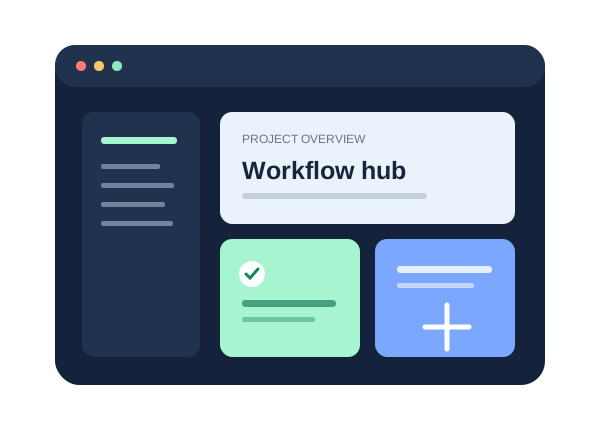
When off-the-shelf tools don’t quite fit, custom software can help your team work with more clarity. We help shape the right solution, from internal dashboards to customer-facing platforms and integrations.
Purpose-built web applications that support your processes, teams, and customers.
Centralize information, track activity, and give users a clearer view of what matters.
Connect your existing tools and reduce duplicate data entry across systems.
Simplify repetitive steps with practical automation and structured processes.
Build for maintainability, reliability, and sensible deployment practices.
Improve existing software, resolve issues, and evolve features as needs change.
Good work comes from understanding the challenge, agreeing on priorities, and improving with evidence.
Understand users, pain points, constraints, and must-have capabilities.
Prioritize features, outline architecture, and agree on delivery milestones.
Develop, review, and test focused increments with feedback along the way.
Launch carefully, monitor issues, and plan enhancements based on use.
We bring strategy, creative thinking, and technical execution together so every piece supports a clear business outcome.
Every business has its own workflows, users, data, and operational challenges. When standard tools do not meet your requirements, custom software can help bring essential information together and reduce manual effort. NextGen Technologies approaches software development by first understanding the problem, then defining a solution that is practical to build, use, maintain, and improve.
Internal applications can help teams manage records, approvals, tasks, customer requests, and reporting in a more consistent way. The right scope depends on who will use the tool, which decisions it should support, and how it fits into existing processes.
A portal can give customers, partners, or employees a secure place to access relevant information and complete defined tasks. Requirements may include account management, role-based permissions, searchable records, notifications, and connections to existing systems.
Dashboards can bring selected data into a clearer view for operational monitoring and decision-making. We help define useful metrics, data sources, user roles, and reporting requirements before development begins.
Where supported APIs and permissions are available, integrations can connect business systems and reduce repeated data entry. Integration planning should account for data mapping, error handling, access control, logging, and how changes in connected systems will be managed.
Automation can help with repetitive tasks such as routing requests, sending notifications, updating records, or preparing reports. We look for workflows with clear rules and measurable benefits, while keeping appropriate human review for sensitive or high-impact decisions.
Software should be designed with its future operation in mind. Depending on the project, planning may cover authentication, permissions, data protection, testing, backups, deployment, documentation, and ongoing maintenance. Security needs are assessed against the data and risks involved.
Good software delivery depends on shared understanding, realistic priorities, regular review, and testing throughout the build.
Map user roles, workflows, business rules, constraints, existing systems, and the outcomes the software should support.
Define essential features, data flows, architecture considerations, delivery phases, and acceptance criteria.
Build and review manageable increments so stakeholders can give feedback before the solution is finalized.
Validate important workflows, permissions, error states, and deployment requirements before release.
Prepare practical guidance for users and administrators, along with agreed technical handover materials.
Review issues, usage feedback, and changing business requirements to prioritize future enhancements.
Projects may include business applications, portals, dashboards, workflow tools, customer platforms, and integrations.
Where APIs and access permissions allow, integrations can help reduce duplicate work and improve data flow.
Security needs are reviewed during discovery and may include access control, data handling, secure development practices, testing, and maintenance.
Maintenance, bug fixes, and enhancements can be scoped to your solution and support needs.
Let’s turn your goals into a clear plan, a better digital experience, and measurable progress.
Talk to our team about website development, software, SEO, and digital marketing.